
A knowledge transfer document should let someone run the next cycle without asking the outgoing owner to explain every line. Start with what the new owner has to deliver. Then add the decisions that change the plan, the exceptions they’re likely to face, and the work they’ll inherit on day one.
Take a monthly publishing handover. The notes may say a partner logo was dropped last time, but the incoming editor needs to know when to make that call and where to find the approved replacement. This example shows how to turn notes like that into a knowledge transfer document. Once the guide is ready, you can use Recastia to share it as a browsable flipbook with page numbers the team can refer to together.
Start With the Next Release
Write the first page for the person taking over the calendar. Give them a starting point and a way to tell when the work is ready to move on. In the sample guide, the incoming managing editor confirms the article list with the campaign lead five working days before release. The assigning editor then sends the copy and its sources to the product reviewer. Name who checks the destination links and the date against the calendar after scheduling. A reminder to “check before launch” is easy to miss when everyone thinks someone else owns it.
Put timing next to the action it affects. Keep the full editorial calendar where the team already maintains it. The handover only needs to point the incoming owner to the right place and tell them which dates matter.
Turn Past Fixes Into Rules Someone Can Use
Scan the notes for moments when the team changed course. Write down what triggered the change, what the team did, and why. If the old owner has moved on, a short explanation helps the new one tell which parts of the process can change safely.
| What the Notes Say | What the Incoming Editor Needs |
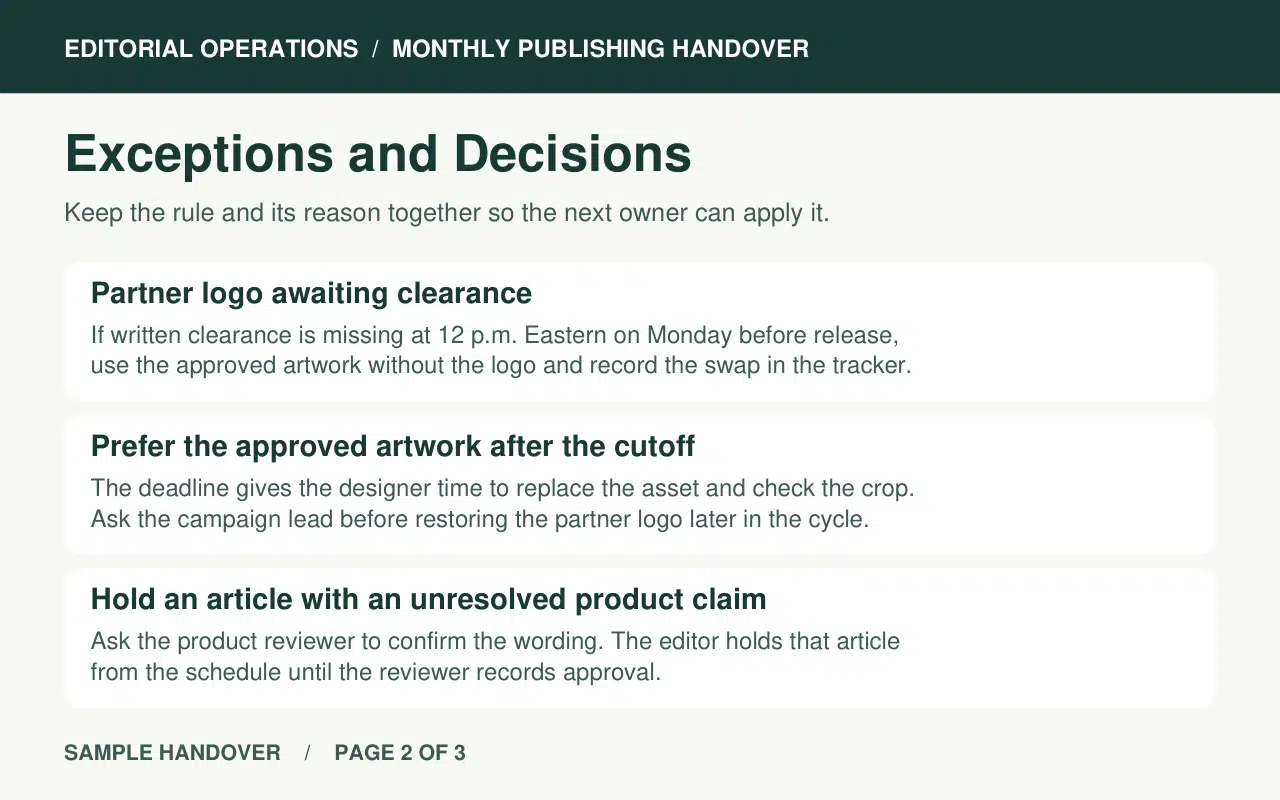
| “Dropped partner logo last time.” | If written clearance is missing at noon Eastern on the Monday before release, use the approved artwork without the logo. Record the swap in the release tracker. The cutoff gives the designer time to replace the asset and check the crop. |
| “Product claim held up scheduling.” | Hold the affected article until the product reviewer records approval. The assigning editor sends the reviewer the claim and its source so they can check the proposed wording. |
| “Still waiting on the partner team.” | The incoming managing editor checks for written clearance before Monday at noon Eastern. Until then, the release tracker should show the item as open. |
The first two entries are rules the next editor can reuse. The last one belongs in the handover because it’s still open. Keep its current status in the tracker so the team can update it when a reply comes in.
Share the Guide as a Flipbook With Recastia
Las notas ya contienen la información que tu equipo necesita. Una vez que la hayas escrito, Recastia puede facilitar la consulta del PDF final. Mantén las aprobaciones confidenciales y el material no publicado en los sistemas que tu equipo ya utiliza. Usa una versión aprobada de la guía al crear el folleto interactivo.
- Exporta la guía de traspaso como un PDF.
Coloque la próxima versión en la página uno, las normas y excepciones vigentes en la página dos, y los asuntos pendientes en la página tres. Asigne un título y un número a cada página. Quien recuerde la norma del logotipo de la reunión de traspaso debería poder encontrarla fácilmente sin tener que leer toda la guía.
- Abre el PDF en Flipbook Maker.
Upload the finished PDF to Creador de libros animados. Sign in if Recastia prompts you to continue. Once the reader is ready, turn through to the last page. Use the page controls to go back to the exception page, then check that the deadline, replacement artwork, and decision owner are legible. If any detail is unclear, fix it in the source PDF before sharing.
- Comparte la guía con un punto de partida.
Si un enlace del navegador cumple con las normas de uso compartido de tu equipo, abre la aplicación Compartir para copiar el enlace de lectura. Indica al nuevo editor la página dos y pregúntale qué ilustración usaría si se supera el plazo sin autorización por escrito. Pídele que abra la guía en el dispositivo que utilizará para la publicación y que busque la norma.
Run One Handover Rehearsal
Give the incoming editor ten minutes with the guide and the tracker. Ask them to find the artwork, explain the fallback, and point to where they’ll record the decision. Then give them a second scenario. The logo is cleared, but one article still has an unapproved product claim. What stays on hold?
Listen for the distinction. The team can replace the logo under the standing rule, while the affected article stays out of the schedule until the claim is approved. If the editor can explain both decisions and find the records, they have enough context to run the next cycle. If they have to ask where something lives, add that location to the guide while you’re both there.
Preguntas frecuentes
Pídele al propietario actual que redacte los pasos y las decisiones, y luego asigna una tarea real al nuevo propietario. Detectará accesos faltantes, nombres desconocidos y pasos que los demás dan por sentados. Pídele a un tercer miembro del equipo que revise las reglas de aprobación o escalamiento de las que sea responsable.
Anota la regla que el equipo utilizará para la próxima versión y quién puede modificarla. Añade una fecha de revisión y un enlace a la discusión para quienes necesiten consultar los antecedentes. Si no hay una regla acordada, registra la decisión como pendiente e indica quién será el responsable de resolverla.
Enumera el espacio de trabajo o la carpeta que necesitan, el nivel de permisos y el rol que puede otorgarlos. Solicita el acceso antes del ensayo. No incluyas los datos de inicio de sesión ni las credenciales en la guía.
Actualiza el PDF y su copia de lectura cuando cambie una regla de decisión, se modifique una responsabilidad o un enlace deje de funcionar. Utiliza el registro para consultar los cambios de estado diarios. Incluye una fecha de revisión en la guía para que el nuevo responsable sepa qué edición está leyendo.
Conclusión
Build the knowledge transfer document around the next release. Keep deadlines beside the decisions they govern, and give every unresolved item an owner and a next action.
Before you hand over the knowledge transfer document, ask the new owner to try one decision with the guide open. A browsable copy makes the right page easy to find. Their answer tells you what the page still needs.
Dale vida a tu PDF con Recastaia.
Crea, personaliza y comparte tu contenido de una forma más atractiva.